
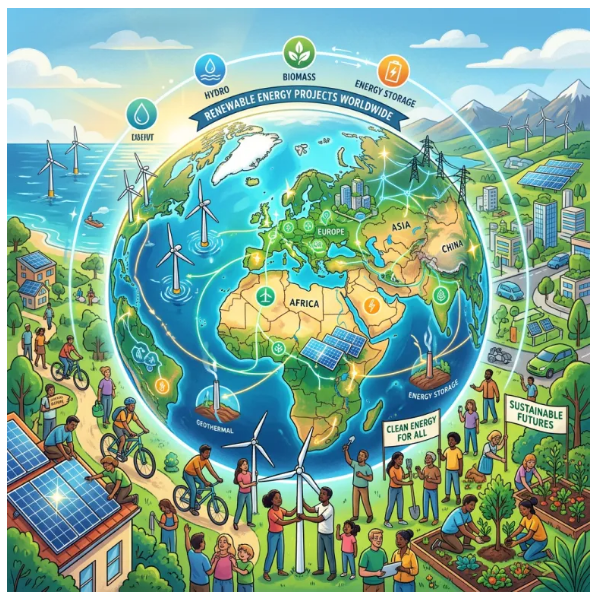

World Environment Day 2026 marks a defining moment in the global climate movement, highlighting a significant transition from policy discussions and environmental pledges to practical implementation and measurable outcomes. As nations, industries, and communities confront the realities of climate change, sustainability is increasingly being recognized not merely as an environmental responsibility but as a fundamental pillar of economic growth, social development, and long-term resilience. The evolving global narrative demonstrates that environmental stewardship and economic prosperity are no longer competing priorities but mutually reinforcing objectives.
Growatt
One of the most visible drivers of this transformation is the rapid expansion of renewable energy. Clean energy technologies have evolved from being viewed primarily as tools for reducing carbon emissions to becoming powerful engines of economic development. Across emerging economies, renewable energy projects are creating employment opportunities, reducing operational costs, strengthening local businesses, and improving energy security. The growing demand for sustainability-focused talent reflects this trend. Green jobs have witnessed remarkable growth, with significant increases in hiring across sectors such as manufacturing, operations, logistics, supply chain management, and digital services. The renewable energy industry, particularly solar power, has emerged as a major contributor to this employment expansion, supporting both economic and environmental goals simultaneously.
Despite this progress, the next phase of the clean energy transition presents important challenges. Industry experts emphasize that the key barriers are no longer limited to financing or policy support. Instead, execution-related issues such as fragmented supply chains, procurement delays, logistics bottlenecks, and limited domestic sourcing capabilities are becoming critical concerns. Achieving ambitious renewable energy targets will require stronger industrial ecosystems, improved transparency, and resilient supply networks capable of supporting large-scale deployment. Building domestic manufacturing capacity and enhancing supply-chain readiness will be essential for ensuring the long-term success of the energy transition.
At the same time, sustainability is reshaping the manufacturing sector. Industrial facilities are increasingly adopting environmentally responsible practices that demonstrate how economic productivity and resource conservation can coexist. Investments in onsite solar power generation, water recycling systems, and Zero Liquid Discharge technologies are helping industries reduce emissions while improving operational efficiency. These initiatives are not only lowering environmental impacts but are also generating long-term economic benefits through resource optimization and reduced utility costs. Furthermore, innovation is extending beyond industrial operations to consumer products, where water-efficient technologies and sustainable solutions are enabling individuals to participate in conservation efforts through everyday choices.
The built environment is also undergoing a profound transformation. Buildings and urban infrastructure account for a significant share of global carbon emissions, making sustainable design an essential component of climate action. As cities continue to expand rapidly, planners, architects, and educational institutions are advocating for a more holistic approach to development. Increasing emphasis is being placed on circular economy principles, resource efficiency, climate-responsive design, and sustainable material selection. These measures can substantially reduce the environmental footprint of urban growth while improving the quality of life for future generations.
An important aspect of World Environment Day 2026 is its focus on nature-based solutions under the theme, “Inspired by Nature, For Climate. For Our Future.” This theme reinforces the understanding that many of the most effective climate solutions already exist within natural ecosystems. Forests, wetlands, water bodies, and biodiversity-rich landscapes provide critical services that support climate resilience, carbon sequestration, and ecological balance. Protecting and restoring these systems is increasingly recognized as essential for sustainable development and climate adaptation.
Ratul Puri, Chairman, Hindustan Power
“Climate change is one of the defining challenges of our time, requiring collective action from governments, businesses and communities. As India advances towards its commitment of achieving net-zero greenhouse gas emissions by 2070, the industrial landscape is undergoing a significant transformation. The focus today is not only on growth, but on achieving it through cleaner energy, greater resource efficiency, innovation and the responsible use of natural resources. Industries that embrace sustainability will be better positioned to remain resilient, competitive and future-ready.
Across sectors, businesses are increasingly investing in decarbonisation, renewable energy, energy efficiency and sustainable operations. This shift reflects a growing recognition that environmental responsibility and economic progress must go hand in hand.
We view sustainability as an integral part of responsible growth. Through our focus on clean energy, resource conservation, ash utilization, zero liquid discharge and emissions reduction initiatives, we are contributing to India’s energy transition while creating long-term value. World Environment Day is a reminder that meaningful progress comes from sustained action and a shared commitment to a more sustainable future.“
Manish Dabkara, Chairman & Managing Director, EKI Energy Services; President, Carbon Markets Association of India
“Nature remains the world’s most effective climate technology, supporting carbon absorption, biodiversity, water security, and livelihoods. This World Environment Day, climate action must move beyond ambition to implementation. Restoring ecosystems is essential for long-term economic resilience and human well-being. Governments, businesses, and financial institutions must collaborate to channel investments toward measurable environmental outcomes. The future belongs to those who recognize that nature is not merely part of the economy—it is the foundation of it.”
Akanksha Priyadarshini, Practice Lead for Entrepreneurship, TechnoServe India & Senior Business Advisor, Greenr Sustainability Accelerator
“Renewable energy is no longer only an environmental necessity; it is also a driver of economic growth and inclusion. Across emerging markets, clean energy is creating jobs, strengthening businesses, improving energy access, and building resilience. For small enterprises, especially women-led businesses, renewable energy lowers costs and fosters innovation. As we mark World Environment Day 2026, accelerating clean energy adoption means not only reducing emissions but also creating sustainable livelihoods, empowering communities, and advancing a more equitable future.”
Abhishek Sarmah, Head – Corporate Strategy, Strategic Marketing, ESG & CSR, Delta Electronics India
“Renewable energy is the defining direction of our time and remains central to Delta Electronics India’s vision. Through solutions such as solar inverters, EV charging infrastructure, industrial automation, and smart power management, we are helping make clean energy more reliable, efficient, and accessible. India’s progress in solar deployment, grid resilience, and industrial energy efficiency is encouraging. On World Environment Day, we reaffirm our commitment to innovation-driven sustainability and enabling a cleaner, smarter, and more resilient future.”
Dr. Prof. Anand Achari, Principal, VES College of Architecture