
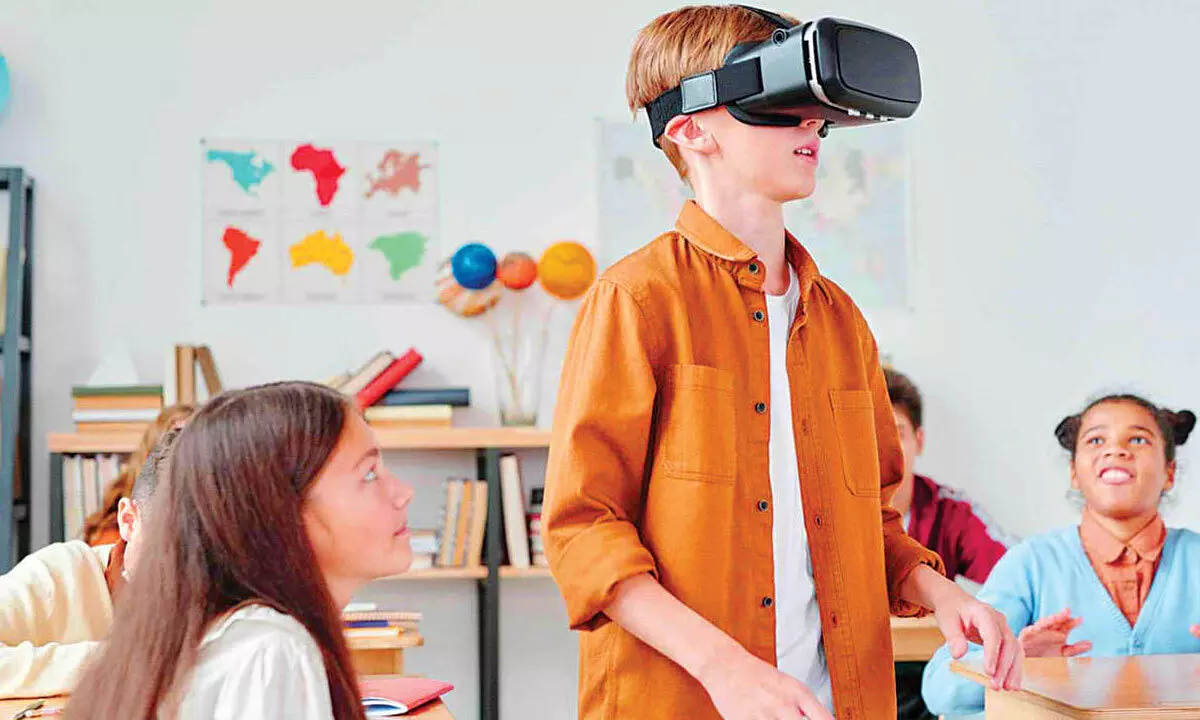

In a world where technology is rapidly transforming design, architecture education is undergoing a profound shift. Tools like Augmented Reality (AR) and Virtual Reality (VR) are taking students beyond sketches and models, allowing them to walk through spaces before a s ingle brick is laid.Dr. Prof. Anand Achari, Principal at VES College of Architecture, shares how immersive technologies are changing the way future architects think, feel, and create—and why adaptability and empathy are now essential design skills.
Excerpts from an interview
What excites you most about the role of immersive technologies like AR and VR in reshaping how architecture is taught and experienced today?
What excites me is the shift from imagination to immersion. In traditional architecture education, students relied heavily on drawings, physical models, and their ability to mentally visualise a space. AR and VR remove those limitations. Now, students can step inside their designs, exploring scale, proportions, and light in real time. That kind of spatial understanding, especially early in their journey, is transformative.
Don’t just draw your designs—experience them. Immersive tools help you notice details you’d miss on paper.
How are AR and VR redefining how students and professionals approach form, function, and human interaction within built environments?
These tools are blurring the old separation between form and function. In VR, you can feel how people might move through a space before it’s even built. For example, you might notice that a hallway feels too narrow or that natural light shifts in ways you didn’t expect. But the biggest impact is empathy. AR and VR allow you to experience your design from different perspectives—a child’s, an elderly person’s, or someone with mobility challenges. That leads to more inclusive, people-centred design.