

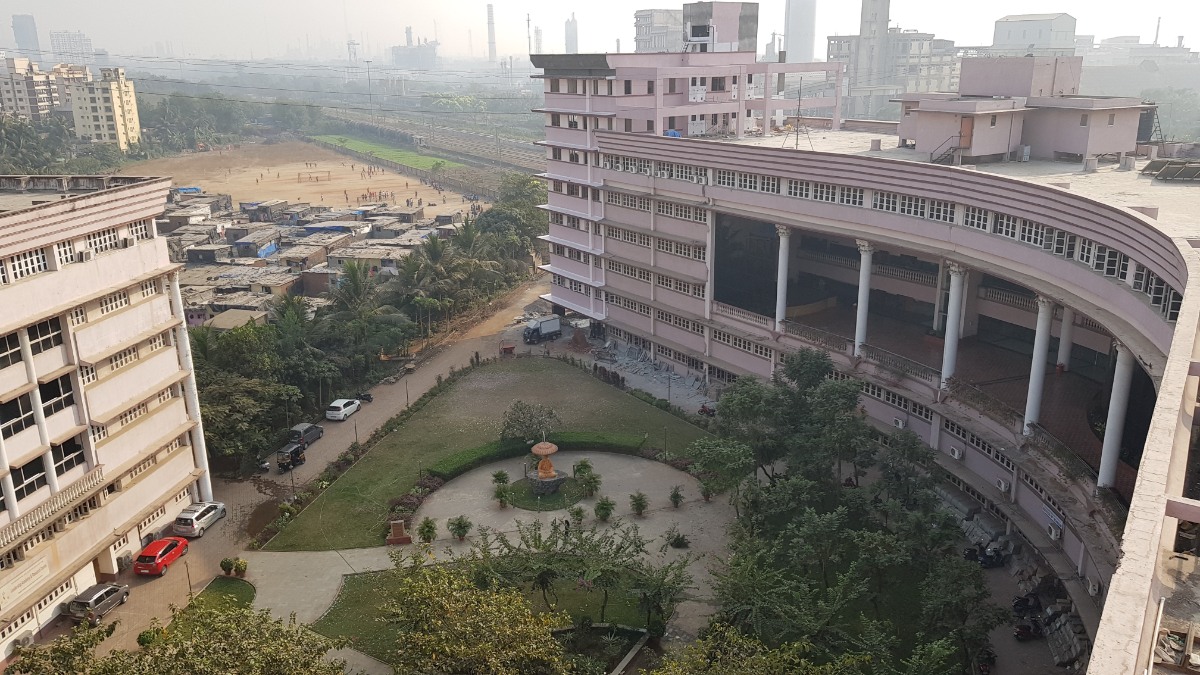
IT’S AN INVESTMENT IN THE FUTURE OF ARCHITECTURE
Prof. (Dr.) Anand Achari Principal, Vivekanand Education Society’s College of Architecture (VESCOA), Mumbai
Prof. (Dr.) Anand Achari, Principal of Vivekanand Education Society’s College of Architecture (VESCOA), shares his profound insights on bridging the gap between theoretical knowledge and practical applications in architectural education with an insightful interview with Education Post’s Prabhat Anand.
With a distinguished career as an architect, educator, and advocate for sustainability, Dr. Achari sheds light on topics ranging from green building certifications to integrating cutting-edge technologies like Building Information Modeling (BIM) into academia. He emphasizes the critical role of institutions in shaping future architects who are equipped to address global challenges like climate change through innovative and culturally sensitive design.
As you have experience in both practicing architecture and teaching students in this field, what are the key challenges you perceive in bridging the gap between theoretical knowledge and practical application in architectural education, particularly concerning environmental architecture and sustainability?
The key challenge here lies in ensuring that students not only grasp concepts but also learn to apply them effectively in real-world scenarios. Environmental architecture and
sustainability require a nuanced understanding of site-specific challenges, material selection, and energy efficiency, which often cannot be fully addressed in a traditional classroom setting.
While theoretical lessons provide a foundation, the integration of hands-on experience, through workshops, internships, and live projects, is crucial. Encouraging collaboration with industry experts and promoting research-driven projects also helps students better understand sustainable practices in real-world contexts.
As educators, it’s essential to continuously adapt our curriculum, integrating emerging trends in sustainability while fostering a mindset of innovation and problem-solving among our students.
With your involvement in various green building certification processes such as USGBC, IGBC, and GRIHA, how do you see the evolution of sustainable architecture practices in India over the past decade, and what are the critical factors driving or hindering its adoption in the mainstream architectural industry?
Over the past decade, sustainable architecture practices in India have seen significant evolution, with growing awareness about environmental impact and resource conservation. The adoption of green building certifications has been pivotal in driving this change.
More architects and developers are now recognizing the long-term benefits of sustainability, not only in reducing operational costs but also in enhancing the overall quality of life for occupants.
Critical factors driving this shift include government policies promoting energy-efficient designs, increasing awareness about climate change, and a growing demand from clients for environmentally responsible buildings.
However, challenges such as high initial
costs, lack of skilled professionals, and resistance to change from traditional practices still hinder mainstream adoption. Bridging this gap requires continuous education, innovation in cost-effective sustainable materials, and stronger collaboration between architects, builders, and policymakers.
As a principal and educator, how do you ensure that your institution stays abreast of the latest advancements and trends in architecture, especially in the context of rapidly evolving technologies and methodologies such as Building Information Modeling (BIM) and parametric design?
At VES College of Architecture, we ensure that our curriculum remains relevant and dynamic by integrating the latest advancements and trends in architecture. This includes keeping pace with evolving technologies like Building Information Modeling (BIM) and parametric design, which are becoming integral to modern architectural practice.
We actively collaborate with industry experts, conduct workshops, and invite guest lecturers who are pioneers in these fields. Additionally, our faculty members are encouraged to pursue continuous professional development to stay updated. We also incorporate hands-on learning experiences through project-based assignments that involve the use of these technologies.
By fostering a culture of innovation and adaptability, we prepare our students to navigate the complexities of modern architecture. The integration of such tools into our teaching approach equips students with the skills needed to succeed in an ever-changing architectural landscape.
This ensures they are well-prepared to tackle the challenges of the future.
View are print coverage
Education Post Magzine Interview Feature
