
Q. Can you highlight the key milestones in VESCOA’s journey towards integrating sustainable practices in architecture education?
A. At VESCOA, we have made significant strides in integrating sustainability into our architecture education. Our multidisciplinary approach balances theory with practice, ensuring students gain a deep understanding of environmental sustainability. Key milestones include embedding sustainability-focused coursework, emphasizing real-world, project-based learning, and using innovative technologies to address contemporary architectural challenges. Our commitment to value-based education and research empowers students to design sustainable habitats while excelling academically and professionally in an evolving built environment.
Q. What do you think are the most critical skills for architects in the green job market?
A. Architects in the green job market must be equipped with a combination of technical and sustainability skills. Key competencies include sustainable design, energy efficiency, and knowledge of certifications such as LEED. Additionally, skills in energy modelling, life cycle analysis, and project management are vital for implementing eco-friendly solutions. Another strong pillar is communication and collaboration abilities to advocate for sustainable practices, educate stakeholders, and lead diverse teams, ensuring the success of environment-focused projects.
Q. What collaborations do you have with architectural firms or organizations to provide real-world exposure to students?
A. VESCOA has formed strategic partnerships with industry leaders like ISRO and ASSOCHAM, providing invaluable real-world exposure for our students. Through 86 MOUs, students engage with cutting-edge design techniques, technological innovations, and hands-on projects. Our collaboration with ISRO assists with the introduction of advanced construction methods. ASSOCHAM, on the other hand, facilitates internships, providing practical experiences with industry professionals. These partnerships ensure our students are well-prepared for the challenges of the architectural profession, enhancing their skills and professional networks.
Q. Can you share any examples of projects where students combined traditional methods with modern technology?
A. One standout project was to be involved in designing a building with Net Zero Energy, Net Zero Water, and Net Zero Carbon Emissions, aimed at mitigating climate change. Students were asked to integrate traditional building methods with modern technology, employing passive and active cooling systems, sustainable plumbing, and advanced energy simulations. Tools like BIM, CFD simulations, and daylight simulations were used to assist and refine their designs, blending traditional practices with the latest technology. This hands-on project prepared students to combine industry best practices with innovative solutions to tackle real-world challenges.
Q. Can you share insights into the strategies and innovations shaping the future of sustainable urban planning in India?
A. Sustainable urban planning in India is driven through the adoption of green infrastructure, energy-efficient buildings, and renewable energy solutions. At VESCOA, we focus on equipping our students with practical skills through hands-on learning and close collaboration with the industry. Our curriculum is designed to incorporate emerging technologies with real-world challenges, enabling students to think critically and adopt interdisciplinary approaches. By partnering with industry leaders, we ensure our students stay ahead of the curve, preparing them to play an integral role in shaping the future of sustainable urban spaces in India.
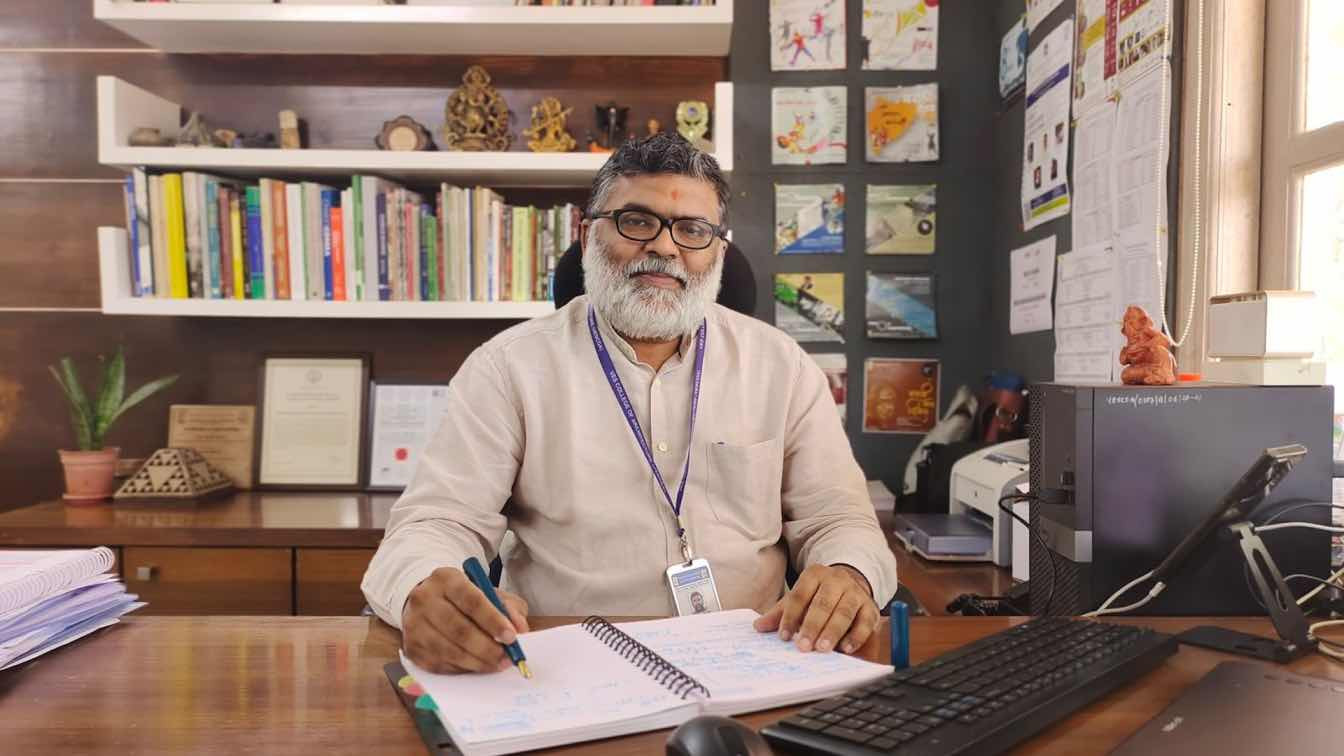
Dr. Prof. Anand Achari, Principal, VES College of Architecture,
leaders, and lead diverse teams, ensuring the success of environment-focused projects.
View are print coverage
Daily Guardian – Interview Feature – December 2024
