Budget 2026–27 prioritizes education as a growth engine, shifting focus to outcome-oriented delivery and employability. The plan integrates education with employment, research, and regional development, aiming to produce skilled graduates and foster innovation. Key initiatives include an Education-to-Employment committee and university townships, signaling a move towards global relevance.
The Union Budget 2026–27 places education at the centre of India’s medium-term growth strategy, reinforcing a decisive shift from expansion-driven policymaking to outcome-oriented delivery. With an education allocation exceeding ₹1.28 lakh crore, the Budget advances a framework where higher education is expected not just to enrol students, but to produce employable graduates, applied research, innovation capacity, and inclusive access at scale.
Across universities, skilling institutions, and industry bodies, there is a growing consensus that Budget 2026–27 represents a structural moment—one that attempts to tightly integrate education, employment, research, and regional development.
Education to employment: From alignment to accountability
A defining feature of Budget 2026–27 is the proposed high-powered Education-to-Employment and Enterprise Standing Committee, designed to align curricula with industry needs, particularly in the services sector, while assessing the impact of emerging technologies such as AI on jobs.


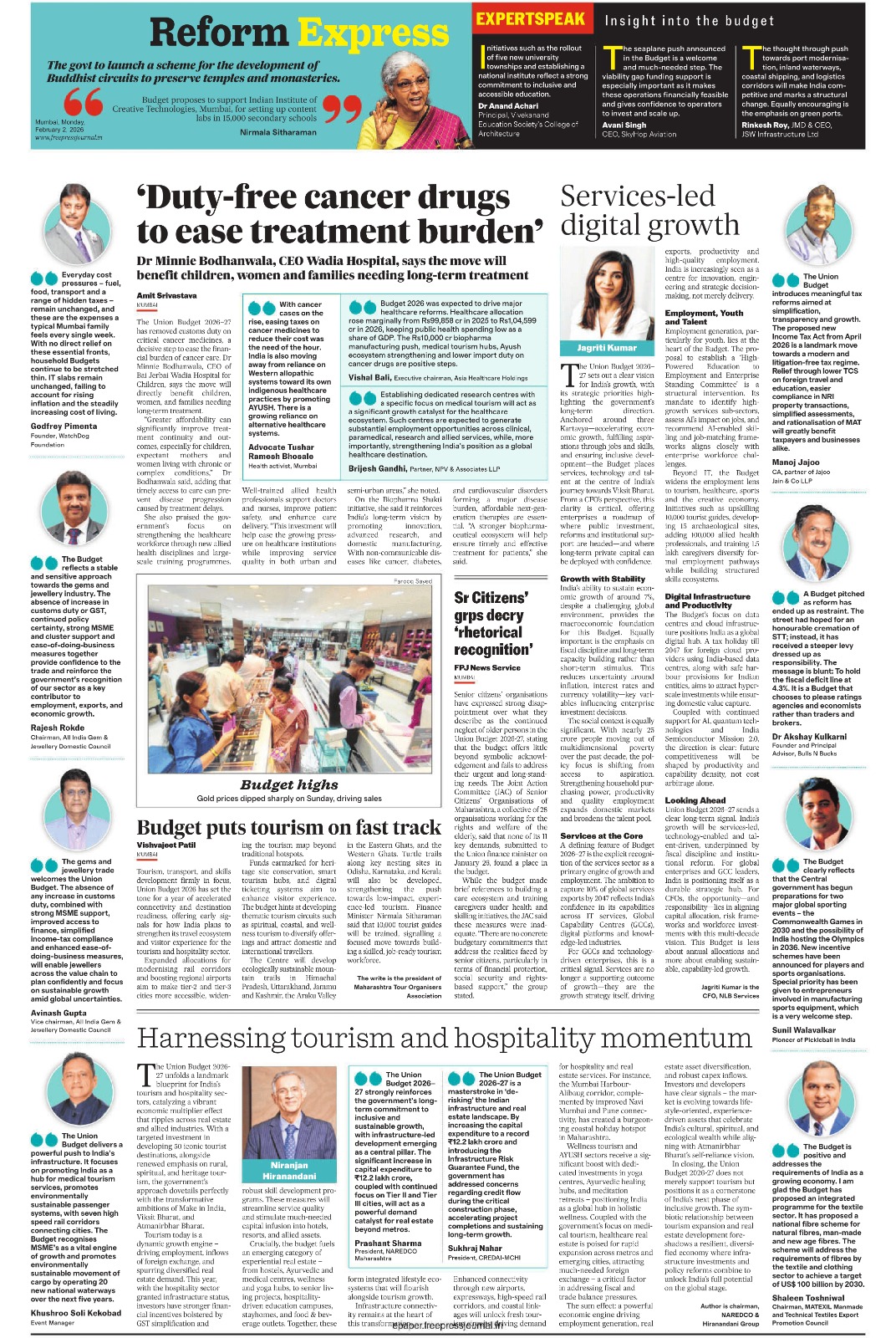
View are print coverage
Free Press Journal_Print_Post Budget Quote 2026