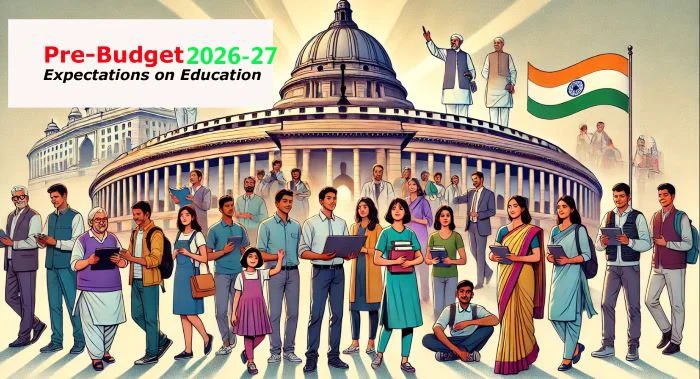

Last year’s Union Budget sent a clear signal that education is central to India’s growth story. With a landmark allocation of ₹1.28 trillion and the launch of initiatives such as the Centre of Excellence in AI for Education with a ₹500 crore outlay, the government positioned technology, innovation, and future-ready skills at the heart of learning reform. All eyes are now on the upcoming budget to see how it builds on these gains and aligns with the evolving priorities and expectations across India’s education and skilling ecosystems.
(the expectations appear in this article appear in order of higher ed, skilling, tech and school ed)
Higher Education
As India repositions its higher education system under NEP 2020, the sector is increasingly being viewed not merely as a social responsibility, but as a strategic economic investment.
While the previous budget strengthened foundational pillars through digital platforms, research missions, and skill initiatives, higher education leaders now believe the next leap must transform universities into globally competitive knowledge hubs—driving research, innovation, employability, and international collaboration. From funding reform and industry partnerships to AI-led learning and global mobility, stakeholders say Budget 2026 must treat higher education as national capability-building. The consensus is clear: the coming budget must mark a shift from access to excellence, from capacity to outcomes, and from spending to strategic investment. By funding research, embracing AI, deepening industry ties, and opening doors to global collaboration, India can turn its universities into engines of innovation and global influence—powering the nation’s journey to a knowledge-driven economy.